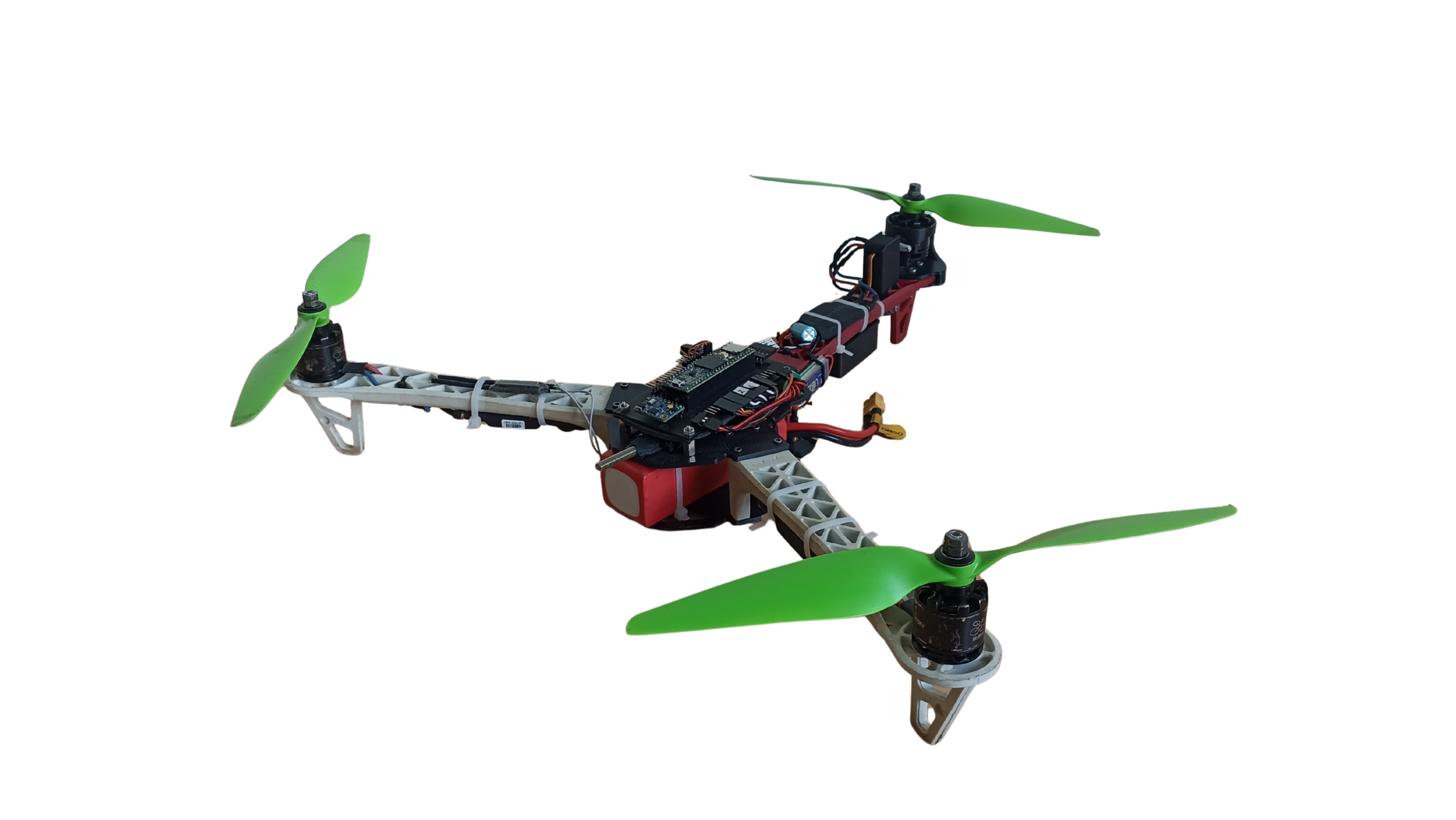
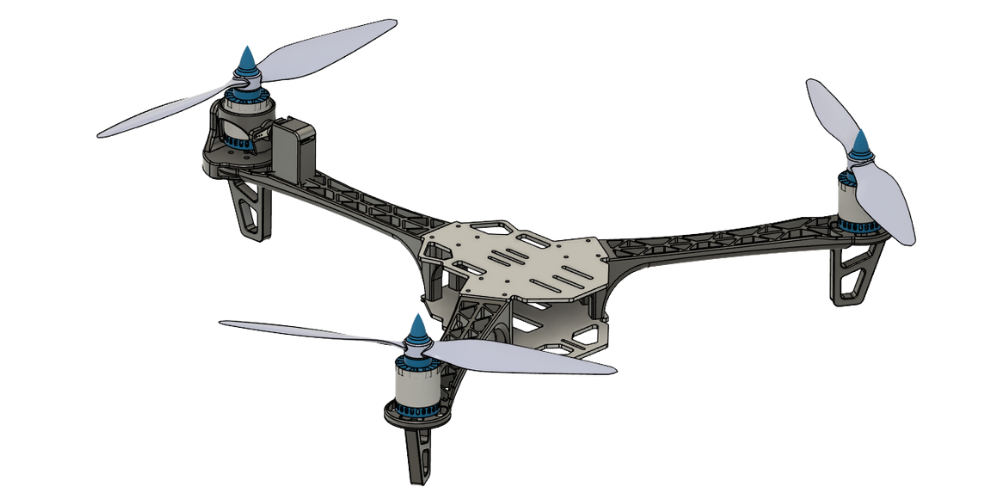
Final project focused on designing, simulating, and validating a Linear Quadratic Regulator (LQR) control system for tricopter altitude stabilization. This work highlights transferable expertise in R&D, QA, QC, and engineering through modeling, implementation, and systematic testing.
The project aimed to stabilize tricopter altitude using an LQR controller. Core stages included system modeling, Q/R tuning, MATLAB/Simulink simulations, C/C++ implementation on Teensy 3.5, and prototype testing. Results demonstrated reliable altitude tracking and validated consistency between simulation and experiment. These tasks directly reflect expertise in R&D (design & modeling), QA (simulation validation), QC (prototype testing accuracy), and engineering (real-time system implementation).
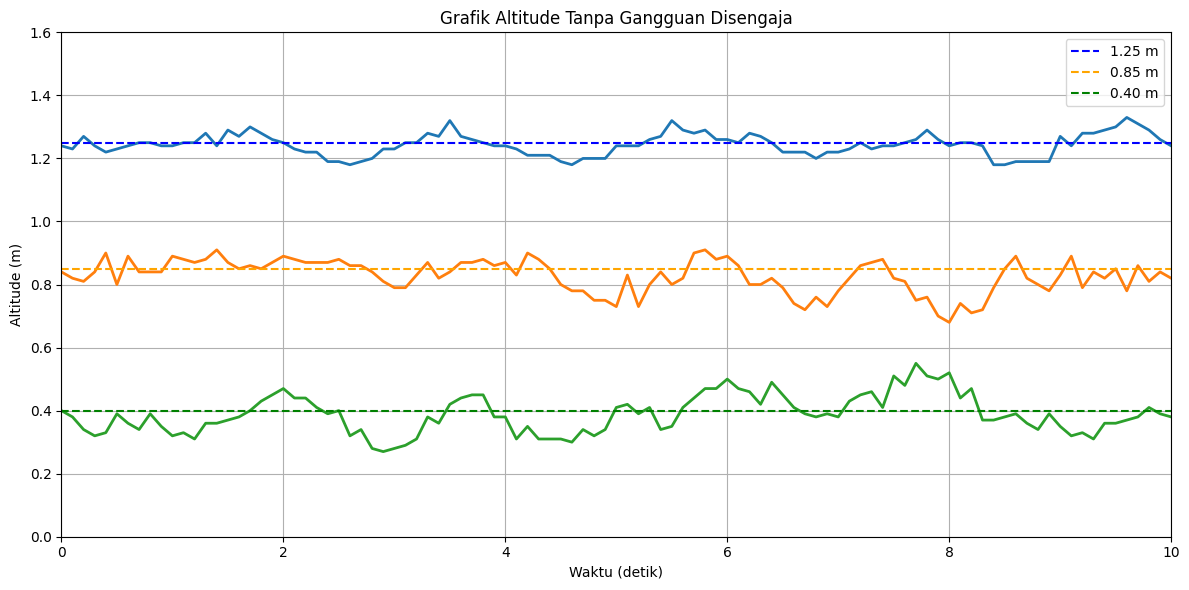
- Steady-state error < 5 cm in step altitude tests.
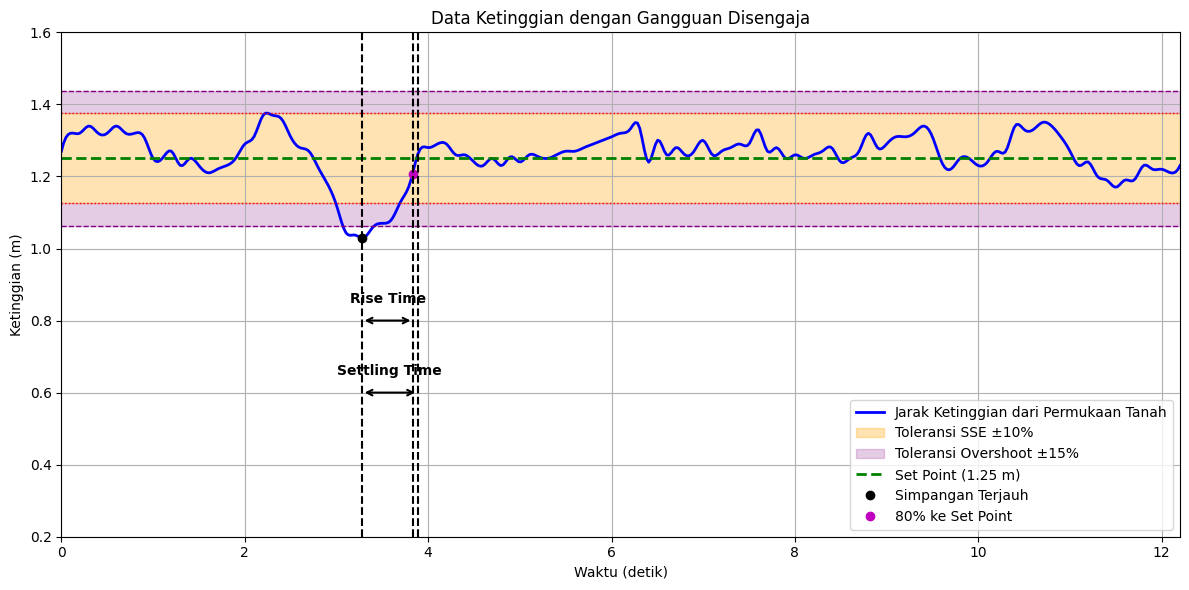
- Robust recovery from impulse disturbances with controlled overshoot.
- Simulation vs experiment agreement > 90% under test scenarios.
These outcomes demonstrate strong alignment with QA and QC methodologies.
Teensy 3.5 was used as the main control platform (with prior experience on Teensy 3.2 & 4.0). The GY-86 module was utilized only for its MPU (IMU), while altitude measurement relied on the HC-SR05 ultrasonic sensor as a cost-effective reference for low-altitude testing. MATLAB supported modeling, Q/R tuning, data plotting, and validation, ensuring consistency between simulation and experiment.
Click an image to view in full size.